CMU 10-714 Assignments
实验笔记
随缘更新ing
前置要求:微积分、线性代数(可能需要一点矩阵论)、DL基础、Python(熟悉
numpy 和 pytorch 更好)。
几乎不使用任何第三方库实现几个深度学习库,包括自动微分、常见神经网络、数据加载器、优化器,并使用
CUDA 实现 GPU 加速。代码量适中,但是基本 pytorch
中有的东西都有了。如果还想深入了解 torch.compiler
相关内容,可以继续学习Machine
Learning Compiler ,通过 TVM 介绍了 AI Compiler 中的大部分内容。
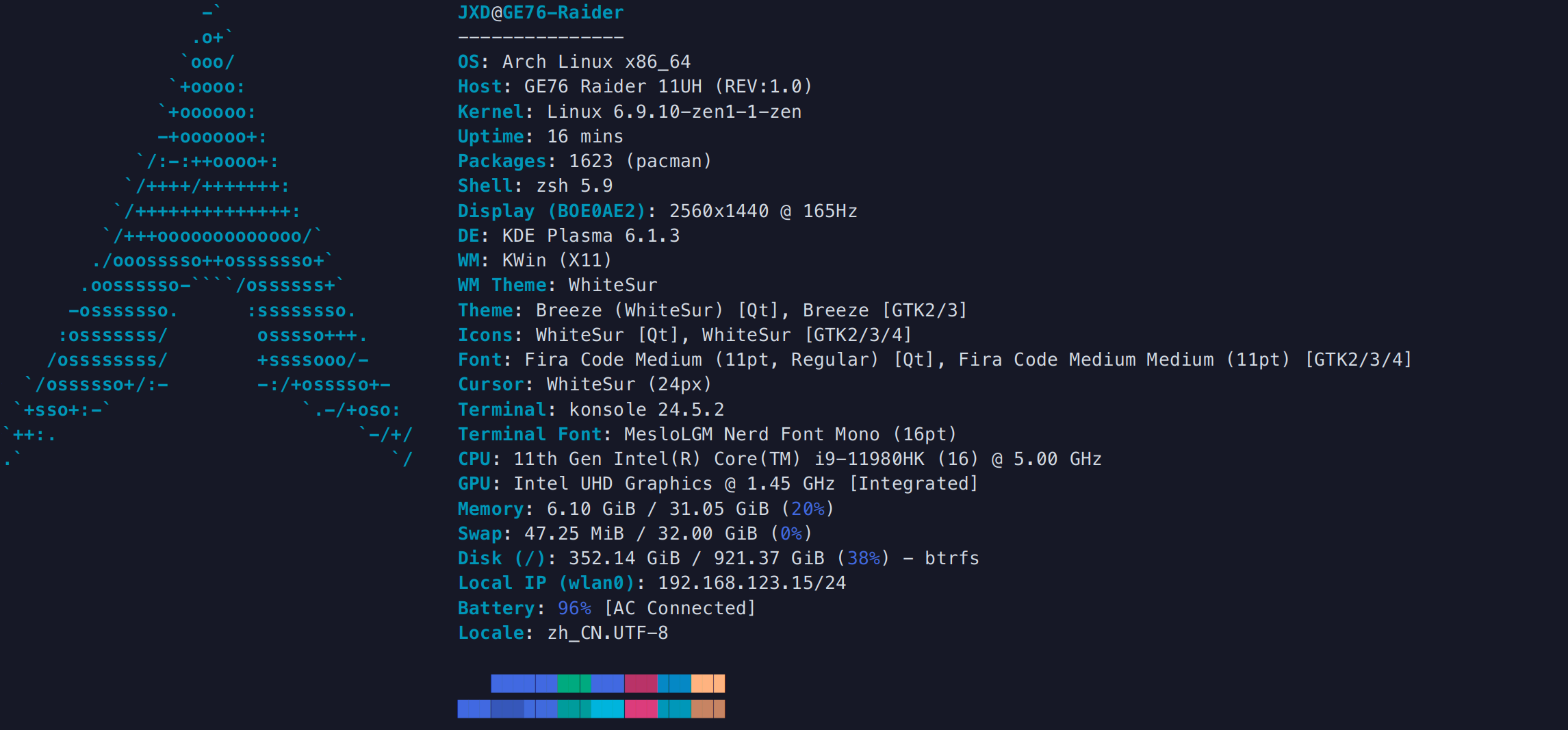
实验环境为 Arch Linux,环境如下:
既然这门课为 DL Systems,
本文将重点放在实现上,而不是各种数学公式的推导。
由于官方自动评分系统目前不再接受非选课学生注册,因此本代码仅保证能够通过已有测试样例。
本人不是特别熟悉 python 语法,实现过程中可能有不符合 python
规范的地方,欢迎大家指正。
资源存档
课程官网:Deep Learning
Systems
实验要求即测试:Assignments
环境配置
采用 conda 进行包管理。 Arch 用户直接 yay
安装 anaconda 即可。
1
2
3
4
source /opt/anaconda/bin /activate base3.12
HW0
实验仓库地址:Assignment
1
第一个 homework 主要用于简要复习 Machine Learning
的内容。需要实现包括训练两层的线性神经网络在内的 7 个函数。
Basic add function
用来熟悉评测系统,简单的返回 a + b 即可。
1
2
def add (x, y ):return x + y
然后根据实验提示看看 test
文件内的测试框架,确保无误(谁家好人 a + b 能写错)后运行
python3 -m pytest -k "add" 进行测试。
paese_mnist
读取 MNIST 手写数字数据集。LeCun
老爷子的博客 内对这个数据集的格式作了详细介绍,直接看 FILE FORMATS
FOR THE MNIST DATABASE 这个部分即可。
整个数据集分为 4 个文件,分别为 train_image, train_label, test_imgae,
test_label。整个数据集直接使用原始的二进制来存储,前 \(2\) 个字节固定为 \(0\) ,第 \(3\) 个字节表明数据类型,第 \(4\) 个字节表明维度数。之后的 \(n * 4\) 个字节表明数据的各个维度大小,其中
\(n\) 为将第 \(4\) 个字节视为 uint8
之后的大小。之后即 MNIST 数据集的实际图片。
例如 0x00 0x00 0x08 0x03 60000 28 28 表明,数据集采用
uint8 格式存储(第 \(4\)
个字节为 0x08,约定 0x08 为
uint8),数据集有 \(3\)
个维度(第 \(4\) 个字节为
0x03),之后的 \(3 * 4 =
12\) 个字节表明数据集的维度为 (60000 * 28 * 28)。
具体实现中,使用 gzip 库对文件进行
按字节 读取,最后进行标准化即可(每个像素灰度值除以
\(255\) )。
1
2
3
4
5
6
7
8
9
10
11
12
13
def parse_mnist (image_filename, label_filename ):with gzip.open (image_filename, 'rb' ) as image:'>HBB' , image.read(4 ))tuple (struct.unpack('>I' , image.read(4 ))[0 ] for _ in range (dims))0 ], -1 )255.0 with gzip.open (label_filename, 'rb' ) as label:'>HBB' , label.read(4 ))tuple (struct.unpack('>I' , label.read(4 ))[0 ] for _ in range (dims))0 ])return (image_data, label_data)
Softmax loss
实现交叉熵损失函数。照着公式写即可,不再赘述: 1 2 3 4 def softmax_loss (Z, y ):sum (np.exp(Z), axis=1 )) 0 ]), y]return np.mean(sum_log - prob)
SGD for Softmax Regression
实现 softmax 回归的一个 epoch 上的训练过程。
首先从数据中每次拿出一个 batch 大小的数据,然后根据公式算即可。label
转换为 one-hot 的小
trick:I_y = np.eye(num_classes)[y_batch]
1 2 3 4 5 6 7 8 9 10 11 12 13 14 15 16 17 def softmax_regression_epoch (X, y, theta, lr = 0.1 , batch=100 ):0 ] 1 ]for start in range (0 , m, batch):min (start + batch, m)0 ]sum (exp_logits, axis=1 , keepdims=True )
SGD for Two-layer nn
实现一个双层感知机在一个 epoch 上的训练过程。
ReLu 本质为和 \(0\)
取最大值,张量版本的 max 为
np.maximum。需要注意的是,除法运算能提前就提前,否则可能会导致精度不够。
1 2 3 4 5 6 7 8 9 10 11 12 13 14 15 16 17 18 19 20 21 22 23 24 def nn_epoch (X, y, W1, W2, lr = 0.1 , batch=100 ):def ReLU (X ):return np.maximum(0 , X)0 ]1 ]for start in range (0 , m, batch):min (start + batch, m)0 ]sum (Z2_exp, axis=1 , keepdims=True ) - I_y0 ).astype(np.float32)
Softmax Regression by cpp
使用 cpp 实现上面的 Softmax 回归。
与 Python 版本不懂,cpp
没有那么多的语法糖,需要手写矩阵乘法,需要处理多维数据映射为一维。不过在处理
ont-hot 方面比 Python 自由了很多。
1 2 3 4 5 6 7 8 9 10 11 12 13 14 15 16 17 18 19 20 21 22 23 24 25 26 27 28 29 30 31 32 33 34 35 36 37 38 39 40 41 42 43 44 45 46 47 48 49 50 51 52 53 54 55 56 57 58 59 60 61 62 63 64 65 66 67 68 69 70 71 72 73 74 75 76 77 78 79 void softmax_regression_epoch_cpp (const float *X, const unsigned char *y, float *theta, size_t m, size_t n, size_t k, float lr, size_t batch) for (size_t i = 0 ;i < m;i += batch) {assert (batch != 0 );size_t batch_size = std::min (batch, m - i);const float *X_b = X + i * n;const unsigned char *y_b = y + i;float *logits = new (std::nothrow) float [batch_size * k];float *grad_logits = new (std::nothrow) float [batch_size * k];float *grad_theta = new (std::nothrow) float [n * k]();if (!logits || !grad_logits || !grad_theta) {delete [] logits;delete [] grad_logits;delete [] grad_theta;return ;for (size_t b = 0 ;b < batch_size;b ++) {for (size_t c = 0 ;c < k;c ++) {float tot = 0.0f ;for (size_t d = 0 ;d < n;d ++) {for (size_t b = 0 ;b < batch_size;b ++) {float max_logit = logits[b * k];for (size_t c = 1 ;c < k;c ++) {if (logits[b * k + c] > max_logit) {float sum_exp = 0.0f ;for (size_t c = 0 ;c < k;c ++) {float exp_val = std::exp (logits[b * k + c] - max_logit);int true_class = static_cast <int >(y_b[b]);for (size_t c = 0 ;c < k;c ++) {1.0f ;for (size_t b = 0 ;b < batch_size;b ++) {for (size_t d = 0 ;d < n;d ++) {float x_val = X_b[b * n + d];for (size_t c = 0 ;c < k;c ++) {float scale = lr / static_cast <float >(batch_size);for (size_t j = 0 ;j < n * k;j ++) {delete [] logits;delete [] grad_logits;delete [] grad_theta;
HW0 总结
建议看完 Lecture 2
之后再写这个实验。没经过西瓜书拷打的同学一开始看到满屏幕的公式应该会很懵,不过好在熟悉推导之后实现起来还是比较简单的,很适合用来熟悉
NumPy 和基础 DL 模型。
HW1
这个 homework 共有 6
个部分:算子正向传播,梯度反向传播,拓扑排序、反向自动微分、softmax
损失以及双层感知机的 SGD。
Forward & Backward
Computation
需要实现基本算子的前向传播和反向传播。
前两个部分关系比较紧密,这里放在一起说了。实现算子的时候,需要时刻清楚每一步的张量形状。还需要处理
NumPy 中无处不在的 广播 。
推导梯度的时候需要注意:当前算子的 out_grad
形状和当前算子的前向运算形状相同,例如令 \(A
\in \mathbb{R}^{m \times d}\) ,\(B \in
\mathbb{R}^{d \times n}\) ,当前算子为
Matmul(A, B),则从后一层传过来的 out_grad
形状为 \(\mathbb{R}^{m \times
n}\) 。
对应参数的梯度形状和该参数相同。即当 \(X
\in \mathbb{R}^{m \times n}\) ,则 \(\frac{\partial L}{\partial \mathbf{X}} \in
\mathbb{R}^{m \times n}\) 。
需要注意的是,前向传播中操作对象是
NDarray,即只进行单纯的数值运算。而反向传播需要扩展计算图,操作对象为
ndl.Tensor。强烈建议通读 needle/autograd.py 中的
class Tensor 的源码,对理解框架很有用。
所有元素对一个标量进行幂运算。输入输出形状相同,张量梯度形式和标量相同。建议所有梯度都返回元组,方便后续写
AD 的时候进行解包。
1
2
3
4
5
6
7
8
9
10
11
class PowerScalar (TensorOp ):def __init__ (self, scalar: int ):self .scalar = scalardef compute (self, a: NDArray ) -> NDArray:return array_api.power(a, self .scalar)def gradient (self, out_grad: Tensor, node: Tensor ):0 ]self .scalar * power_scalar(a, self .scalar - 1 )return (out_grad * grad, )
张量对应元素之间的除法。输入输出形状相同,张量梯度形式和标量相同。分别对分子分母求偏导数即可。
1
2
3
4
5
6
7
8
9
class EWiseDiv (TensorOp ):def compute (self, a, b ):return array_api.divide(a, b)def gradient (self, out_grad, node ):1 )2 )))return (out_grad * lhs_grad, out_grad * rhs_grad)
DivScalar
所有元素对一个标量进行除法。输入输出形状相同,张量梯度形式和标量相同。对分子求导即可。
1
2
3
4
5
6
7
8
9
class EWiseDiv (TensorOp ):def compute (self, a, b ):return array_api.divide(a, b)def gradient (self, out_grad, node ):1 )2 )))return (out_grad * lhs_grad, out_grad * rhs_grad)
广义的矩阵转置,实际更类似 swap 轴的操作。设 \(A \in \mathbb{R}^{2, 3, 4, 5}\) , 则
transpose(A, axes=(1, 3, )) 结果为 \(A \in \mathbb{R}^{2, 5, 4, 3}\) ,即第 \(1\) 轴和第 \(3\) 个轴交换。当 axes=None
时,默认交换最后两个轴。
因为 \(Y = X^T\) ,所以 \(Y_{ji} = X_{ij}\) 。对损失 \(L\) 求导:
\[
\frac{\partial L}{\partial X_{ij}}=\sum_{k, l}\frac{\partial L}{\partial
Y_{kl}}\cdot\frac{\partial Y_{kl}}{\partial X_{ij}}
\]
而 \(\frac{\partial Y_{kl}}{\partial
X_{ij}} = 1\) 当且仅当 \(k = j\)
且 \(l = i\) ,否则为 \(0\) 。
因此有:
\[
\frac{\partial L}{\partial X_{ij}} = \frac{\partial L}{\partial Y_{ji}}
\]
即
\[
\frac{\partial L}{\partial X} = {(\frac{\partial L}{\partial Y})}^T
\]
所以 transpose 的梯度即为 out_grad
在相同维度上进行一次转置。
1
2
3
4
5
6
7
8
9
10
11
12
13
14
class Transpose (TensorOp ):def __init__ (self, axes: Optional [tuple ] = None ):self .axes = axesdef compute (self, a ):if self .axes is None :2 , ndim - 1 else :self .axesreturn array_api.swapaxes(a, axis1, axis2)def gradient (self, out_grad, node ):return (transpose(out_grad, self .axes), )
本质是重新对内存下标进行映射。
根据链式法则有:
\[
\frac{\partial L}{\partial x_i}=\sum_j\frac{\partial L}{\partial
y_j}\cdot\frac{\partial y_j}{\partial x_i}
\]
由于 reshape 只是对元素的重排列,某个 \(y_j\) 要么是由某个唯一的 \(x_i\) 直接复制过来,要么和 \(x_i\) 没有任何关系,有 \(\frac{\partial{y_j}}{\partial{x_i}} =
1\) ,当且仅当 \(j = i\)
时成立。
即
\[
\frac{\partial L}{\partial x_i}=\frac{\partial L}{\partial y_j}
\]
即把 \(\frac{\partial L}{\partial
y}\) 按相反的方式进行 reshape 即得到 \(\frac{\partial L}{\partial y}\) 。
1
2
3
4
5
6
7
8
9
10
class Reshape (TensorOp ):def __init__ (self, shape ):self .shape = shapedef compute (self, a ):return array_api.reshape(a, self .shape)def gradient (self, out_grad, node ):0 ].shapereturn (reshape(out_grad, shape), )
广播操作本质是沿某个轴进行复制,根据链式法则有:
\[
\frac{\partial L}{\partial x_i}=\sum_{j\in\text{由 }x_i\text{
复制得到的位置}}\frac{\partial L}{\partial y_j} \cdot
\frac{\partial{y_j}}{\partial{x_i}}
\]
由于 \(y_j = x_i\) ,即 \(\frac{\partial{y_j}}{\partial{x_i}} =
1\) ,即沿着广播的轴对 out_grad 进行求和即可。由于
NumPy 中的广播可能会升维,所以最后进行一次 reshape 对齐 \(X\) 的维度即可。
1
2
3
4
5
6
7
8
9
10
11
12
13
14
15
16
17
18
19
20
21
22
23
24
25
class BroadcastTo (TensorOp ):def __init__ (self, shape ):self .shape = shapedef compute (self, a ):return array_api.broadcast_to(a, self .shape).copy()def gradient (self, out_grad, node ):0 ].shapeself .shapeif input_shape == output_shape:return (out_grad, )len (output_shape) - len (input_shape)list (range (ndim_added)) for i, (in_dim, out_dim) in enumerate (zip (input_shape, output_shape[ndim_added:])):if in_dim == 1 and out_dim > 1 : if axes:tuple (axes))return (out_grad,)
这个算子是沿特定轴进行求和,结果进行降维。如果
axes=None,则对全局进行求和,返回标量。
以 \(y = x1 + x2\) 举例,有
\[
\frac{\partial y}{\partial x_1}=1,\quad\frac{\partial y}{\partial x_2}=1
\]
由链式法则有:
\[
\begin{aligned}
& \frac{\partial L}{\partial x_1}=\frac{\partial L}{\partial
y}\cdot1=\frac{\partial L}{\partial y} \\
& \frac{\partial L}{\partial x_2}=\frac{\partial L}{\partial
y}\cdot1=\frac{\partial L}{\partial y}
\end{aligned}
\]
即 \(y\) 的梯度值对所有参与求和的
\(x\) 值都是相同的。所以只需要将
out_grad 沿着求和的轴广播回去即可。
1
2
3
4
5
6
7
8
9
10
11
12
13
14
15
16
17
18
19
20
21
22
23
class Summation (TensorOp ):def __init__ (self, axes: Optional [tuple ] = None ):self .axes = axesdef compute (self, a ):return array_api.sum (a, axis=self .axes)def gradient (self, out_grad, node ):0 ].shapeif self .axes is None :1 , ) * len (input_shape)return (broadcast_to(reshape(out_grad, new_shape), input_shape), )tuple (ax % len (input_shape) if ax < 0 else ax for ax in self .axes)list (input_shape)for ax in axes:1 return (broadcast_to(reshape(out_grad, tuple (new_shape)), input_shape), )
广义矩阵乘法。NumPy
支持高维矩阵乘法,只需要最后两维度满足矩阵乘法的要求即可,前面的维度都视为
batch。如果维度不匹配,会进行升维或广播。
在计算梯度的时候,根据 Lecture
1中介绍的凑形状方法,可以得到如下两个表达式:
\[
\frac{\partial L}{\partial Y}\frac{\partial Y}{\partial A} = G B^T \\
\frac{\partial L}{\partial Y}\frac{\partial Y}{\partial B} = A^T G
\]
但是 NumPy 会进行 reshape 和
boardcast,根据链式法则,需要进行一次规约。沿着广播轴进行求和,并
reshape 为输入的形状即可。
1
2
3
4
5
6
7
8
9
10
11
12
13
14
15
16
17
18
19
20
21
22
23
class MatMul (TensorOp ):def compute (self, a, b ):return array_api.matmul(a, b)def gradient (self, out_grad, node ):def reduce_to_shape (grad, shape ):if grad.shape == shape:return gradlen (grad.shape) - len (shape)list (range (ndim_added))for i, (s, gs) in enumerate (zip (shape, grad.shape[ndim_added:])):if s == 1 and gs > 1 :if axes:tuple (axes))return reshape(grad, shape)return (reduce_to_shape(lhs_grad, lhs.shape),
按元素取负,梯度即为乘 -1。
1
2
3
4
5
6
7
8
9
10
class Negate (TensorOp ):def compute (self, a ):return array_api.negative(a)def gradient (self, out_grad, node ):return (negate(out_grad), )
这两个都没啥好说的。
1
2
3
4
5
6
7
8
9
10
11
12
13
14
15
class Log (TensorOp ):def compute (self, a ):return array_api.log(a)def gradient (self, out_grad, node ):0 ]return (divide(out_grad, a), )class Exp (TensorOp ):def compute (self, a ):return array_api.exp(a)def gradient (self, out_grad, node ):0 ]return (out_grad * exp(a), )
Topological Sort
这部分需要实现拓扑排序。文档里叽里呱啦说了半天,说白了就是
后续遍历的 DFS 序即为逆拓扑序 。
1
2
3
4
5
6
7
8
9
10
11
12
13
14
15
def find_topo_sort (node_list: List [Value] ) -> List [Value]:dict ()for node in node_list:if not visited.get(node, False ):return topo_orderdef topo_sort_dfs (node: Value, visited: dict , topo_order: List [Value] ) -> None :"""Post-order DFS""" for fa in node.inputs:if not visited.get(fa, False ):True
有同学会问,为什么不用 BFS
的方式求。答维护每个节点的入度是很大的开销。
reverse mode AD
开始措自动微分了。核心代码和 Lecture 3
中讲的都差不多。autograd.py 中还给我们提供了一个
sum_node_list 函数,对一系列 node
进行求和,对应伪代码中 $=_j 的部分。
由于 ops 中的算子都是继承自
TensorOp,会自动调用
make_from_op,然后拓展计算图。
1
2
3
4
5
6
7
8
9
10
11
12
13
14
15
def compute_gradient_of_variables (output_tensor, out_grad ):Dict [Tensor, List [Tensor]] = {}list (reversed (find_topo_sort([output_tensor])))for node in reverse_topo_order:if len (node.inputs) > 0 :for i, fa in enumerate (node.inputs):
Softmax loss
用 ndl.Tensor 的算子实现 softmax
loss。为了方便计算,已经很贴心的把 \(y\)
替换成了独热编码。没啥好说的,照着公式写即可。
1
2
3
4
5
def softmax_loss (Z: ndl.Tensor, y_one_hot: ndl.Tensor ):1 , )))1 , ))return ndl.divide_scalar(tot_loss, Z.shape[0 ])
SGD for nn
利用前面的逐渐,实现一个双层感知机一个 epoch
的训练过程。需要注意,这里传入的 \(y\)
是 label 类型,需要转换为独热编码。然后在更新权重的时候,建议转换成
NumPy 计算,否则会把不必要的运算加入计算图,导致计算图指数级增长。
1
2
3
4
5
6
7
8
9
10
11
12
13
14
15
16
17
18
19
20
21
22
23
def nn_epoch (X, y, W1, W2, lr=0.1 , batch=100 ):0 ]1 ]for start in range (0 , m, batch):min (start + batch, m)0 ]return W1, W2
HW1 总结
强度已经明显大了很多,主要难在推公式上,全靠 GPT 大人推导()。
HW2
Weight Initialization
这四种初始化方法目标一致:让信号在前向传播时每一层的方差都维持在稳定区间,既不会越传越强、也不会逐层衰减,从而避免梯度消失
/ 梯度爆炸。实现上就是按 fan_in / fan_out
反推出均匀分布的范围或正态分布的标准差,再交给 init.rand /
init.randn 生成张量。
正态分布版本: \[
\text{xavier}: \sigma^2 = \frac{2}{\text{fan\_in}+\text{fan\_out}},
\quad \text{kaiming(relu)}: \sigma^2 = \frac{2}{\text{fan\_in}}
\]
均匀分布 \(U(-a, a)\) 的方差是 \(a^2/3\) ,反推回去就有 \(a=\sqrt{6/(\text{fan\_in}+\text{fan\_out})}\) (xavier)和
\(a=\sqrt{6/\text{fan\_in}}\) (kaiming)。两者的差别在分母:kaiming
只看 fan_in,是专门为 ReLU 设计的——\(\text{ReLU}\) 会把一半激活压成
0,方差得乘回 2(即 gain \(=\sqrt
2\) );而反向传播时信号希望 fan_in 和
fan_out 对称,这正是 xavier 分母里多出一个 \(\text{fan\_out}\) 的原因。
1
2
3
4
5
6
7
8
9
10
11
12
13
14
15
16
17
def xavier_uniform (fan_in, fan_out, gain=1.0 , **kwargs ):6 / (fan_in + fan_out))return rand(fan_in, fan_out, low=-a, high=a, **kwargs)def xavier_normal (fan_in, fan_out, gain=1.0 , **kwargs ):2 / (fan_in + fan_out))return randn(fan_in, fan_out, std=std, **kwargs)def kaiming_uniform (fan_in, fan_out, nonlinearity="relu" , **kwargs ):assert nonlinearity == "relu" , "Only relu supported currently" 6 / fan_in)return rand(fan_in, fan_out, low=-bound, high=bound, **kwargs)def kaiming_normal (fan_in, fan_out, nonlinearity="relu" , **kwargs ):assert nonlinearity == "relu" , "Only relu supported currently" 2 / fan_in)return randn(fan_in, fan_out, std=std, **kwargs)
nn Basic Module
python/needle/nn/nn_basic.py。这里有条贯穿全程的规矩:Module.parameters()
只认 Parameter 类型(见
_unpack_params),凡是要被优化的张量都得包一层
Parameter(...),否则优化器根本看不见它。另外 needle
不做隐式广播,w * x + b 之前得手动
broadcast_to。
先看模板里已经写好的骨架(虽然不用自己实现,但决定了所有模块的写法):parameters()
会递归扫描 self.__dict__ 里的 dict / list / tuple,只要把
Parameter 挂成成员变量就能被挖出来;eval() /
train() 也同样递归,会把整棵子树的 training
flag 一并改掉。
1
2
3
4
5
6
7
8
9
10
11
12
13
14
15
16
17
18
19
20
21
22
23
24
25
26
27
28
29
30
31
32
33
34
35
36
37
38
39
40
41
42
43
44
class Parameter (Tensor ):"""A special kind of tensor that represents parameters.""" def _unpack_params (value ):if isinstance (value, Parameter):return [value]elif isinstance (value, Module):return value.parameters()elif isinstance (value, dict ):for k, v in value.items():return paramselif isinstance (value, (list , tuple )):for v in value:return paramselse :return []class Module :def __init__ (self ):self .training = True def parameters (self ):"""Return the list of parameters in the module.""" return _unpack_params(self .__dict__)def _children (self ):return _child_modules(self .__dict__)def eval (self ):self .training = False for m in self ._children():False def train (self ):self .training = True for m in self ._children():True def __call__ (self, *args, **kwargs ):return self .forward(*args, **kwargs)
self.weight 的形状是 (in_features, out_features),所以
forward 里是 X @ W 而非 PyTorch 的
X @ W.T。注意要先初始化 weight 再初始化
bias——两者都会消耗随机数,顺序一换,后面 mugrade
的期望值就全对不上了。bias 借 kaiming 生成一个 (out_features, 1)
再转置成 (1, out_features),把标准差控制在合适范围。
1
2
3
4
5
6
7
8
9
10
11
12
13
14
15
16
17
18
19
20
class Linear (Module ):def __init__ (self, in_features, out_features, bias=True , device=None , dtype="float32" ):super ().__init__()self .in_features = in_featuresself .out_features = out_featuresself .weight = Parameter(weight_tensor, requires_grad=True )if bias == True :1 , dtype=dtype, device=device)self .bias = Parameter(ops.transpose(bias_tensor), requires_grad=True )else :self .bias = None def forward (self, X ):self .weight)if self .bias is None :return resultelse :return result + ops.broadcast_to(self .bias, result.shape)
HW1 里那个用缓存输入开 mask 的 ops_mathematic.ReLU
直接拿来当模块用即可。
1
2
3
class ReLU (Module ):def forward (self, x ):return ops.relu(x)
Sequential / Flatten / Residual
Sequential 正着调一遍即可;Flatten 保留 batch
维,把剩下全部展平,本质就是个 reshape;Residual
直接把输入原样加上去。三者都无需多言。
1
2
3
4
5
6
7
8
9
10
11
12
13
14
15
16
17
18
19
20
21
22
23
class Sequential (Module ):def __init__ (self, *modules ):super ().__init__()self .modules = modulesdef forward (self, x ):for module in self .modules:return outclass Flatten (Module ):def forward (self, X ):0 ]return X.reshape((B, -1 ))class Residual (Module ):def __init__ (self, fn ):super ().__init__()self .fn = fndef forward (self, x ):return x + self .fn(x)
LogSumExp 和 LogSoftmax
在 ops/ops_logarithmic.py 里,这是 SoftmaxLoss
的零件,核心在数值稳定性:直接算 \(\exp(1000)\) 会溢出成 inf,\(\exp(-1000)\) 会下溢成
0。做法是先提出最大值 \(M=\max
z\) :
\[
\log\sum_i e^{z_i} = \log\left(e^{M}\sum_i e^{z_i-M}\right) = M +
\log\sum_i e^{z_i - M}
\]
显见所有指数都 \(\le
1\) ,从根上避免溢出;那些仍然下溢的项本来就相对最大值可忽略,无伤大雅。参考:https://indii.org/blog/gradients-of-softmax-and-logsumexp/
梯度方面 \(\frac{\partial
\text{LSE}(z)}{\partial z_i} = \frac{e^{z_i}}{\sum_j e^{z_j}} = \exp(z_i
- \text{LSE}(z))\) ,恰好就是
softmax。这里有个坑:compute 里我把归约掉的轴 squeeze
掉了(与 Summation 保持一致),反向传回来的
out_grad 因此少了几维,得先 reshape 成对应轴为 1
的形状再广播回去。
1
2
3
4
5
6
7
8
9
10
11
12
13
14
15
16
17
18
19
20
21
22
class LogSumExp (TensorOp ):def __init__ (self, axes=None ):self .axes = axesdef compute (self, Z ):max (Z, axis=self .axes, keepdims=True )sum (array_api.exp(Z - max_z), axis=self .axes, keepdims=True )if self .axes is None :return array_api.squeeze(out)return array_api.squeeze(out, axis=self .axes)def gradient (self, out_grad, node ):0 ]len (Z.shape)range (ndim) if self .axes is None else self .axestuple ([1 if i in axes else Z.shape[i] for i in range (ndim)])return (grad, )
LogSoftmax 沿 axis=1 归一化,输入按题目约定是 2D 的,\(\text{logsoftmax}(z)_i = z_i -
\text{LSE}(z)\) 。它的雅可比 \(\partial
y_i/\partial z_j = \delta_{ij} - p_j\) (\(p=\text{softmax}(z)\) ),所以反向传播恰好是个
rowmatvec:
\[
\text{grad}_z = \text{out\_grad} - p\,\sum_j \text{out\_grad}_j
\]
官方签名载的是 LogSoftmax(axes),但既然已约定只处理 2D +
axis=1,我便图省事把 axes 写死在 compute 里。规范做法是放进
__init__。
1
2
3
4
5
6
7
8
9
10
11
12
13
14
15
class LogSoftmax (TensorOp ):def compute (self, Z ):1 , )max (Z, axis=axes, keepdims=True )sum (array_api.exp(Z - max_z), axis=axes, keepdims=True )return Z - array_api.log(sum_z) - max_zdef gradient (self, out_grad, node ):0 ]1 , ))0 ], 1 )).broadcast_to(Z.shape)return (grad, )
SoftmaxLoss
把 HW1 里那个 loss 用 LogSumExp 重写一遍: \[
\ell_{\text{softmax}}(z,y) = \log\sum_{i=1}^{k}\exp z_i - z_y =
-\,\text{logsoftmax}(z)_y
\]
也就是拿 logsoftmax 的输出点乘 one-hot,全求和再取负并除以
batch_size。one-hot 现在直接用 init.one_hot 生成即可。
1
2
3
4
5
6
7
class SoftmaxLoss (Module ):def forward (self, logits, y ):return -(loss / batch_size)
LayerNorm1d
沿 axis=1(特征维)归一化,与 BatchNorm 沿 axis=0(batch
维)恰好相反,因此完全不受 batch 影响,推理时也不需 running
stats。方差用题目指定的有偏估计(除 \(N\) ,而非 \(N-1\) )。
1
2
3
4
5
6
7
8
9
10
11
12
13
14
15
16
17
18
19
20
21
22
23
24
class LayerNorm1d (Module ):def __init__ (self, dim, eps=1e-5 , device=None , dtype="float32" ):super ().__init__()self .dim = dimself .eps = epsself .weight = Parameter(init.ones(1 , dim, device=device, dtype=dtype), device=device, dtype=dtype)self .bias = Parameter(init.zeros(1 , dim, device=device, dtype=dtype), device=device, dtype=dtype)def forward (self, x ):1 , )) / feature_size1 )).broadcast_to(x.shape)2 1 , )) / feature_size1 )).broadcast_to(x.shape)self .weight.broadcast_to(x.shape)self .bias.broadcast_to(x.shape)self .eps, 0.5 )return out
weight 全 1、bias 全 0,形状均为 (1,
dim),两者都能直接 broadcast_to(x.shape);它们同样要包成
Parameter,否则这两条仿射参数不会被优化。均值方差全靠
summation + reshape + broadcast_to
手搓——needle 不做隐式广播,只能这样。
BatchNorm1d
式子与 LayerNorm 完全一致,只是统计量改沿 batch 维计算,并多出一套
running_mean / running_var:训练时用当前 batch 的统计量,同时以 momentum
滑动更新运行估计;推理(self.training == False)时改用运行估计,来一个样本也能正常前向传播(batch_size = 1)。
\[
\hat{x}_{new} = (1-m)\,\hat{x}_{old} + m\,x_{observed}
\]
1
2
3
4
5
6
7
8
9
10
11
12
13
14
15
16
17
18
19
20
21
22
23
24
25
26
27
28
29
30
31
32
33
34
35
36
37
38
39
40
41
class BatchNorm1d (Module ):def __init__ (self, dim, eps=1e-5 , momentum=0.1 , device=None , dtype="float32" ):super ().__init__()self .dim = dimself .eps = epsself .momentum = momentumself .weight = Parameter(init.ones(1 , dim, device=device, dtype=dtype), device=device, dtype=dtype)self .bias = Parameter(init.zeros(1 , dim, device=device, dtype=dtype), device=device, dtype=dtype)self .running_mean = Tensor(init.zeros(dim), device=device, dtype=dtype, requires_grad=False )self .running_var = Tensor(init.ones(dim), device=device, dtype=dtype, requires_grad=False )def forward (self, x ):if self .training == True :0 , )) / batch_size2 0 , )) / batch_sizeself .running_mean = (1 - self .momentum) * self .running_mean + self .momentum * mean_batch.dataself .running_var = (1 - self .momentum) * self .running_var + self .momentum * var_batch.dataself .weight.broadcast_to(x.shape)self .bias.broadcast_to(x.shape)self .eps, 0.5 )return outelse :self .weight.broadcast_to(x.shape)self .bias.broadcast_to(x.shape)self .running_mean) / ops.power_scalar(self .running_var + self .eps, 0.5 )return out
三个坑:
更新 running stats 务必用 .data
取裸数组,否则这些值会一直挂在计算图上,图越滚越大,带
memory_check 的测试直接 OOM。
running_mean/running_var 是普通
Tensor(requires_grad=False),不能包成
Parameter——它们是统计量而不是参数,被
parameters()
抓去交给优化器就完了。方差也必须是这里手搓的有偏估计,直接抄
x.var(axis=0)(PyTorch 默认无偏、除 \(N-1\) )会对不上 mugrade。train() / eval() 是 Module
递归设置的 flag,藏在 Sequential/Residual 里的 Dropout、BatchNorm
都会跟着切换(test_nn_batchnorm_check_model_eval_switches_training_flag
测的正是这点)。此外,官方文档里 eval 的公式没写仿射项,但 PyTorch
实际是带 \(w, b\) 的,这里照 PyTorch
处理。
Dropout
以概率 \(p\) 置零,再除以 \(1-p\) 把期望拉回来(inverted
dropout),这样推理时可直接恒等返回、无需再缩放:
\[
\mathbb{E}[\text{Dropout}(z_j)] = (1-p)\cdot\frac{z_j}{1-p} + p\cdot 0 =
z_j
\]
1
2
3
4
5
6
7
8
9
10
class Dropout (Module ):def __init__ (self, p=0.5 ):super ().__init__()self .p = pdef forward (self, x ):if not self .training:return x1 - self .p)return x * mask / (1 - self .p)
init.randb 返回 bool 张量,直接乘上去当 mask 用。注意
\(p\) 是「丢弃」的概率,采样参数应写
\(1-p\) 。
优化器
python/needle/optim.py。SGD(带动量和权重衰减):
\[
u_{t+1} = \beta u_t + (1-\beta)\nabla_\theta f(\theta_t), \qquad
\theta_{t+1} = \theta_t - \alpha u_{t+1}
\]
1
2
3
4
5
6
7
8
def step (self ):for param in self .params:if param.grad is not None :if param not in self .u.keys():self .u[param] = ndl.zeros_like(param.data, requires_grad=False )self .u[param] = self .momentum * self .u[param] + (1 - self .momentum) * \self .weight_decay * param.data)self .lr * self .u[param]
Adam 再加二阶动量和偏差修正:
\[
\begin{split}
u_{t+1} &= \beta_1 u_t + (1-\beta_1) g_t \\
v_{t+1} &= \beta_2 v_t + (1-\beta_2) g_t^2 \\
\hat u_{t+1} &= u_{t+1}/(1-\beta_1^t), \hat v_{t+1} =
v_{t+1}/(1-\beta_2^t) \\
\theta_{t+1} &= \theta_t - \alpha\, \hat u_{t+1}/(\hat
v_{t+1}^{1/2}+\epsilon)
\end{split}
\]
1
2
3
4
5
6
7
8
9
10
11
12
13
14
def step (self ):self .t += 1 for param in self .params:if param.grad is not None :if param not in self .m.keys():self .m[param] = ndl.zeros_like(param.data, requires_grad=False )if param not in self .v.keys():self .v[param] = ndl.zeros_like(param.data, requires_grad=False )self .weight_decay * param.dataself .m[param] = self .beta1 * self .m[param].data + (1 - self .beta1) * grad.dataself .v[param] = self .beta2 * self .v[param].data + (1 - self .beta2) * grad.data * grad.dataself .m[param].data / (1 - self .beta1 ** self .t)self .v[param].data / (1 - self .beta2 ** self .t)self .lr * u_hat.data / (ndl.power_scalar(v_hat.data, 0.5 ) + self .eps).data
要点:
全程在 .data(裸 NDArray)上算,一点 autograd
都不要碰,否则每次 step()
都在往计算图上接新节点,图一直长,memory_check 测试立刻
OOM。
不要 in-place 改 param.grad(题目专门强调过)。这里的
weight decay 是加在梯度上的,相当于把 \(\frac{1}{2}\lambda\lVert\theta\rVert^2\)
并进 loss,而非 AdamW 那种 decoupled weight decay。
\(u/m/v\) 这类状态用 dict
按参数存,首次遇到某参数时 zeros_like 开一份;偏差修正用的
\(t\) 是全局步数,在 step
开头自增。忘了 bias correction,前期 \(m,
v\) 偏小会把步长带偏。题目的动量公式带了 \((1-\beta)\) ,与 PyTorch 的 SGD(\(u\leftarrow \beta u + g\) 、没有 \(1-\beta\) )不同,照题目来才能对上
mugrade。
数据管道
python/needle/data/ 下面分三块来写。
数据增广在
data_transforms.py:随机水平翻转就是掷骰子决定要不要
np.flip(img, axis=1)(注意轴是 1,即 W);随机裁剪先
np.pad 补一圈零,再按随机偏移 \(\in[-padding, padding]\) 切回原尺寸。
1
2
3
4
5
6
7
8
9
10
11
12
13
14
15
16
17
18
19
20
21
22
23
class RandomFlipHorizontal (Transform ):def __init__ (self, p=0.5 ):self .p = pdef __call__ (self, img ):"""H x W x C NDArray -> 以概率 p 水平翻转""" self .pif flip_img:1 )return imgclass RandomCrop (Transform ):def __init__ (self, padding=3 ):self .padding = paddingdef __call__ (self, img ):"""零填充后随机裁剪回原尺寸""" self .padding, high=self .padding+1 , size=2 )self .padding, self .padding), (self .padding, self .padding), (0 , 0 )), 'constant' )self .padding + shift_x:self .padding + shift_x + img_size[0 ],self .padding + shift_y:self .padding + shift_y + img_size[1 ], :]return img
MNISTDataset:__init__ 直接复用 HW1 的
parse_mnist 读入 images/labels;__getitem__ 先
reshape 成 28x28x1 才能喂给 transforms(它们约定输入是 HxWxC),最后返回
(image, label) 二元组。
1
2
3
4
5
6
7
8
9
10
11
12
13
14
class MNISTDataset (Dataset ):def __init__ (self, image_filename, label_filename, transforms=None ):self .images, self .labels = parse_mnist(image_filename, label_filename)self .transforms = transformsdef __getitem__ (self, index ):self .images[index]if self .transforms is not None :self .apply_transforms(x.reshape((28 , 28 , 1 )))return x, self .labels[index]def __len__ (self ):return self .images.shape[0 ]
Dataset 基类已经把
apply_transforms(依次跑一遍 transforms
列表)写好了,子类只需要实现 __getitem__ 和
__len__。
DataLoader 的 __iter__ /
__next__:shuffle=False 时
__init__ 已把 np.arange(len(dataset)) 用
np.array_split 切好;shuffle=True 时须在
__iter__(即每个 epoch 开头)重新
np.random.permutation 一次,并把游标 self.idx
归零——所以 __iter__ 不是摆设,少了它第二个 epoch
就没数据。__next__ 取一段索引、把样本 np.stack
起来,取完 raise StopIteration 让 for 循环正常结束。
1
2
3
4
5
6
7
8
9
10
11
12
13
14
15
16
17
18
19
20
21
22
23
24
25
26
27
28
29
class DataLoader :def __init__ (self, dataset, batch_size=1 , shuffle=False ):self .dataset = datasetself .shuffle = shuffleself .batch_size = batch_sizeif not self .shuffle:self .ordering = np.array_split(np.arange(len (dataset)),range (batch_size, len (dataset), batch_size))def __iter__ (self ):if self .shuffle:self .ordering = np.array_split(len (self .dataset)),range (self .batch_size, len (self .dataset), self .batch_size),self .idx = 0 return self def __next__ (self ):if self .idx >= len (self .ordering):raise StopIterationself .ordering[self .idx]self .idx += 1 self .dataset[i] for i in batch_indices]if isinstance (batch[0 ], tuple ):return tuple (Tensor(np.stack(col)) for col in zip (*batch))return Tensor(np.stack(batch))
文档说 __next__ 返回 NDArray,但这版测试是拿
batch[0].numpy() 取值的,所以要包成
Tensor。zip(*batch) 把「(图, 标签)
的列表」转成「(图堆叠, 标签堆叠)」,顺带解决 label 各自形状 (1,)
对不齐的问题。
MLP ResNet
apps/mlp_resnet.py。残差块为 Linear → norm → ReLU →
Dropout → Linear → norm,外面套一层 nn.Residual 再接一个
ReLU:
1
2
3
4
5
6
7
8
9
10
11
12
13
14
15
16
17
18
19
20
21
22
def ResidualBlock (dim, hidden_dim, norm=nn.BatchNorm1d, drop_prob=0.1 ):return nn.Sequential(def MLPResNet (dim, hidden_dim=100 , num_blocks=3 , num_classes=10 , norm=nn.BatchNorm1d, drop_prob=0.1 ):return nn.Sequential(2 , norm, drop_prob) for _ in range (num_blocks)],
「Modules should be initialized to match the order of
execution」这句并不是建议——每个 nn.Linear
都消耗随机数,构造顺序一变,后面所有层的权重全跟着变,mugrade
期望输出立刻对不上。
epoch 靠 opt 是否给定来切模式:给了就
.train(),没给就
.eval()(测试会故意先调成反方向,就为校验这一点);loss
和错误率都按样本数加权累加,最后除以总样本数。np.random.seed(4)
是对确定性的要求。train_mnist 就是搭两个 dataloader(训练集
shuffle=True)、建模型、建优化器,再循环 epoch。
1
2
3
4
5
6
7
8
9
10
11
12
13
14
15
16
17
18
19
20
21
def epoch (dataloader, model, opt=None ):4 )if opt is not None :else :eval ()0.0 , 0.0 , 0 for X, y in dataloader:0 ]if opt is not None :1 )sum (pred != y.numpy())return total_error / total_samples, total_loss / total_samples
默认超参(Adam、lr=1e-3、weight_decay=1e-3、batch=100、hidden=100、3
个 block)跑满 10 epoch,i9-11980HK 上约 7 秒一个 epoch:
epoch
train err
train loss
test err
test loss
1
12.11%
0.3975
4.71%
0.1521
2
4.71%
0.1565
4.03%
0.1263
5
2.18%
0.0721
3.08%
0.1011
10
1.49%
0.0485
2.71%
0.0918
测试错误率约 2.7%,比 HW1 手搓的 MLP 好太多。注意后期 train err
仍在降、test err 已基本不降,过拟合的迹象来了。
HW2 总结
比 HW1 更磨人的是各种「隐形约定」而非算法本身:.data
忘了就是拿内存换计算图,Parameter
忘了包就被优化器无视,初始化顺序错一位整套权重就换一套,train/eval
flag 决定 BatchNorm 和 Dropout
到底生不生效,需要给每种场景写两套流程。
到这一个基本的 DL System 就已经完成了。接下来就是实现 GPU
后端,以及更复杂的神经网络。